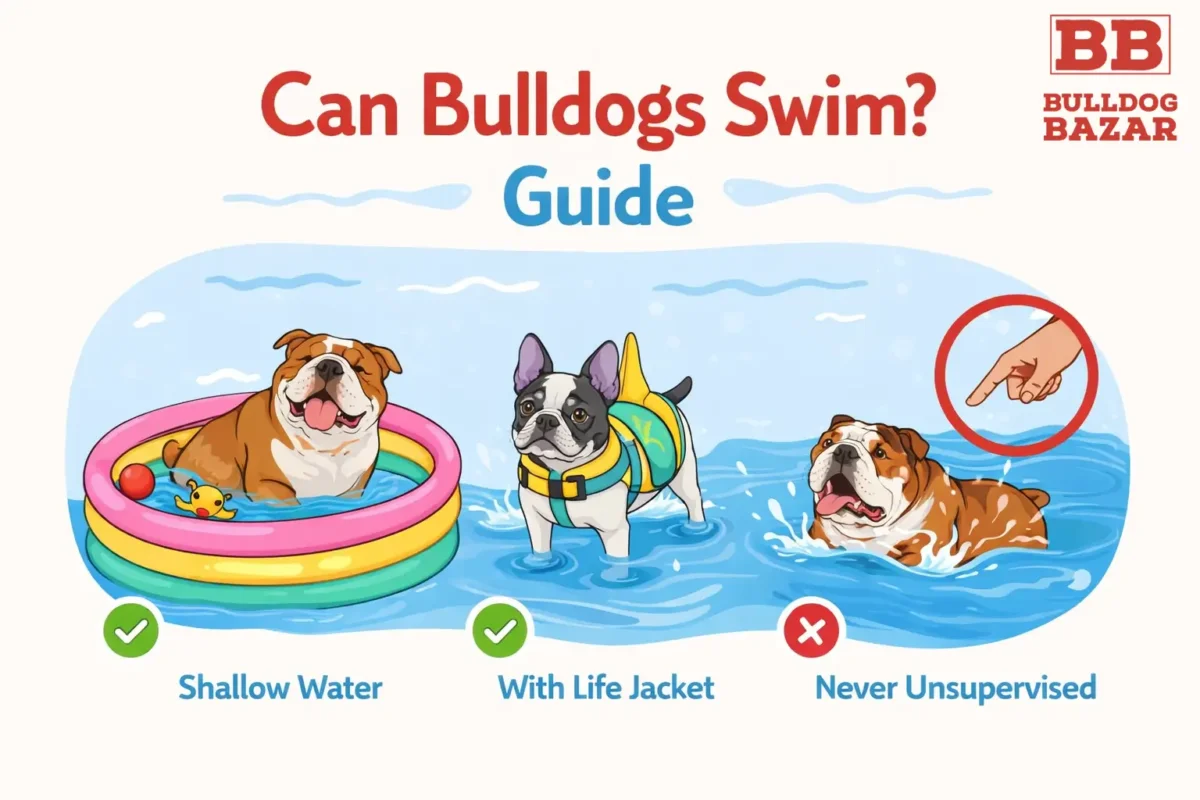


Yes… and also no. That’s the most honest answer.
Both English and French Bulldogs can move in water, and some will even look like they’re “swimming” for a short time. But as breeds, bulldogs are not built for safe, effortless swimming like many other dogs. Their body structure and breathing anatomy make water a higher-risk environment—especially when the water is deep, the dog becomes tired, or the situation isn’t fully controlled.
I’m not writing this as a vet or a rescue organization. I’m writing this as a bulldog owner.
My English Bulldog, Zeus, lived with me for 10 years, and during his life we had many controlled experiences with water—from shallow kiddie pools on hot days to closely supervised play where he clearly enjoyed himself, but also showed how quickly bulldogs can fatigue. Those experiences helped me understand what applies not only to English Bulldogs, but to French Bulldogs as well, since both share the same core physical limitations in water.
In this guide, we’ll keep things practical: whether English and French Bulldogs can swim, why deep water is risky for both, what “safe water time” actually looks like, and the simple rules that turn water exposure into a positive experience instead of a dangerous one. No fear-mongering, no myths—and no pretending bulldogs swim like Labradors.
Table of Contents
Why Bulldogs Struggle in Water
English and French Bulldogs struggle in water for the same fundamental reasons. Their bodies are heavy in the front, their legs are short, and their heads are large compared to the rest of their frame. This shifts their center of gravity forward, making it difficult to stay balanced and keep their head above water.
On top of that, bulldogs are brachycephalic dogs. Their short airways make breathing less efficient, especially during physical effort. In water, this becomes a serious limitation. A bulldog can become tired or short of breath much faster than people expect, even if the dog appears calm at first.
This doesn’t mean bulldogs should never touch water. It means water needs to be shallow, controlled, and always supervised.
Can English Bulldogs Swim?
English Bulldogs are not natural swimmers. Some can paddle briefly, but most cannot maintain a stable swimming position for long. Their broad chest and heavy head tend to pull them forward and down, especially once fatigue sets in.
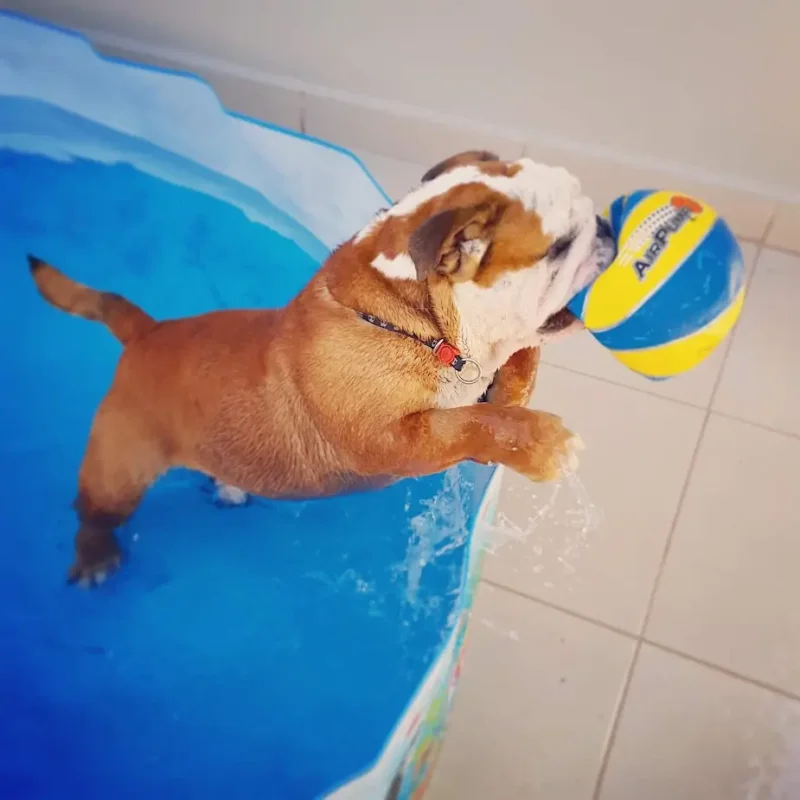
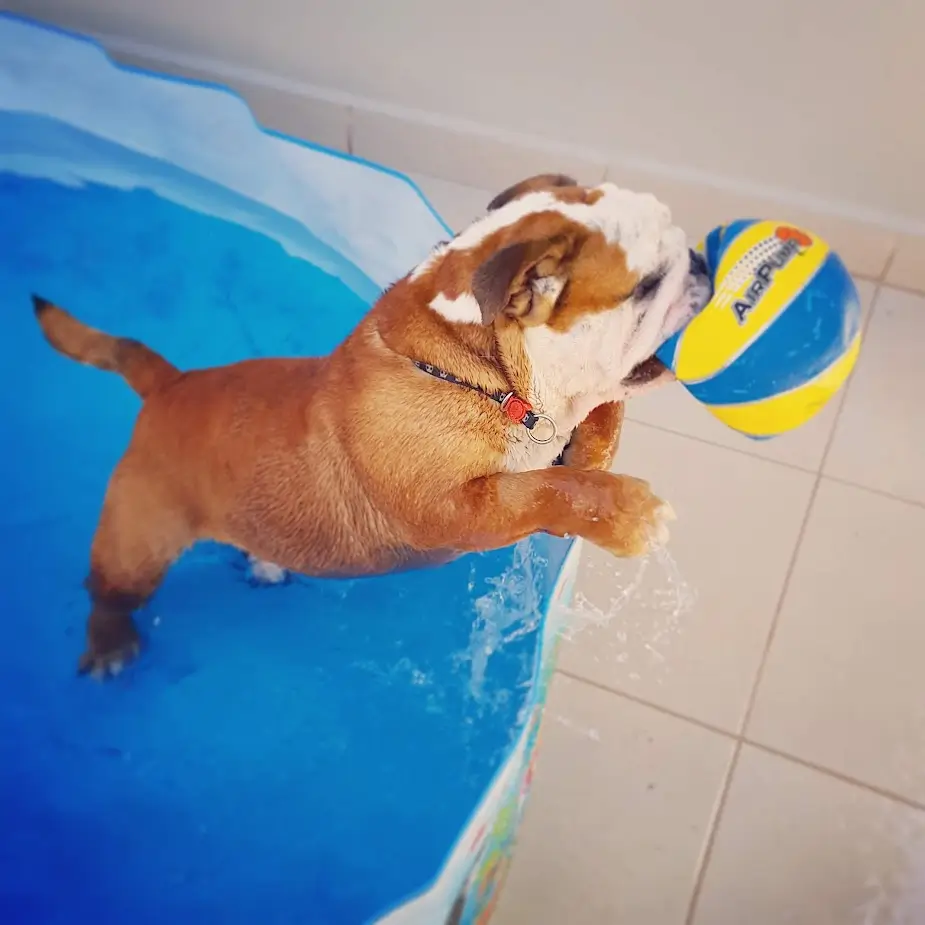
In shallow water, many English Bulldogs enjoy standing, walking, or lightly splashing. This kind of water exposure can be refreshing and safe when done correctly. Problems usually start when the water becomes deep enough that the dog can no longer touch the bottom.
Based on real-life experience, English Bulldogs often appear confident in water right up until the moment they suddenly lose balance or energy. That transition can happen very fast, which is why deep pools, lakes, or unsupervised water access are risky for this breed.
Can French Bulldogs Swim?
Bulldog Anatomy: Why Their Bodies Work Against Them in Water
Understanding why bulldogs struggle in water requires looking at four specific anatomical features that work against them:
1. Brachycephalic Airway
Both English and French Bulldogs have shortened airways that make breathing less efficient, even on land. In water, where breathing requires precise timing and positioning, this becomes a serious vulnerability. A bulldog that gets even slightly tired will struggle to coordinate breathing with paddling — a problem that water-bred dogs like Retrievers simply don't face.
2. Front-Heavy Weight Distribution
Bulldogs carry a disproportionate amount of their body weight in their chest, shoulders, and head. This creates a forward-tilting center of gravity that works fine on land but becomes dangerous in water. Instead of floating level like most dogs, bulldogs tilt nose-down — exactly the wrong direction when you need to breathe.
3. Short, Muscular Legs
A Labrador's long legs act like efficient paddles in water. A bulldog's short, stocky legs generate far less propulsion relative to their body weight. The result: more effort for less movement, leading to rapid fatigue.
4. Dense Muscle Mass
Bulldogs are incredibly muscular for their size. Muscle is denser than fat, which means bulldogs have less natural buoyancy than many other breeds. They simply don't float as easily.
Can English Bulldogs Swim?
English Bulldogs are not natural swimmers, and most cannot maintain a safe swimming position for more than a few seconds without assistance. Their broad chest, heavy skull, and short legs create a front-heavy body that tilts forward in water — making it extremely difficult to keep their nose and mouth above the surface.
That said, many English Bulldogs genuinely enjoy water. Standing in a shallow kiddie pool, walking along a beach where the water barely reaches their chest, or splashing in a creek on a hot day — these are all experiences that English Bulldogs can safely enjoy when properly supervised.
From personal experience with my English Bulldog Zeus, the tipping point between "having fun" and "struggling" happens fast. Zeus loved shallow water and would happily stand in his pool for 10-15 minutes. But even in water that reached his shoulders, I could see his breathing change and his confidence drop within seconds. That transition from calm to stressed is the moment every English Bulldog owner needs to recognize and prevent.
Bottom line: English Bulldogs can enjoy water. They cannot safely swim in deep water, even for short periods, without a life jacket and hands-on supervision.

Can French Bulldogs Swim?
French Bulldogs face the same fundamental swimming limitations as their English cousins — perhaps even more so. Despite being smaller and appearing more agile, Frenchies have an even more extreme brachycephalic (flat-faced) structure, which further restricts their breathing capacity during physical exertion in water.
A French Bulldog's compact body and disproportionately large head act like an anchor. In water deeper than their chest, most Frenchies will instinctively paddle but cannot generate enough lift to keep their airway consistently above the waterline. Exhaustion sets in quickly — often within 30 seconds to a minute.
The biggest danger with French Bulldogs is owner overconfidence. Because Frenchies are energetic and fearless on land, many owners assume they'll handle water the same way. They won't. A Frenchie that happily jumps into a pool is not a Frenchie that can get itself out safely.
French Bulldog Water Safety Checklist
- Always use a life jacket in water deeper than their elbows
- Never leave a Frenchie near an unfenced pool — even for a moment
- Limit water sessions to 5-10 minutes maximum
- Watch for heavy panting, wide eyes, or loss of coordination — these mean "get out now"
- Dry their facial folds and ears thoroughly after water exposure to prevent infections
Some French Bulldogs seem more energetic or agile at first, which can give owners a false sense of security. However, stamina in water is still very limited. Once tired, French Bulldogs struggle to keep their nose and mouth above water, especially without assistance.
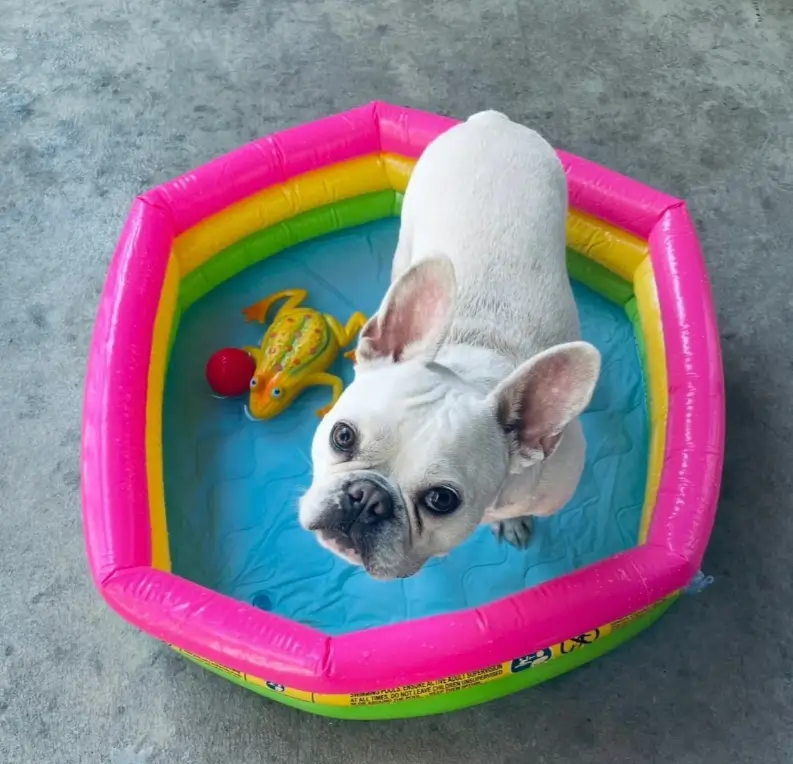
Just like with English Bulldogs, shallow water play can be safe and enjoyable for French Bulldogs. Swimming in deep water, however, should never happen without a properly fitted life jacket and close human supervision.
Are Bulldogs Natural Swimmers?
No. Bulldogs are not natural swimmers.
Unlike breeds developed for retrieving or water work, the historical purpose of French Bulldogs were never built for swimming. Their physical design favors strength and stability on land, not buoyancy or endurance in water.
This doesn’t mean every bulldog will panic near water. Many enjoy it. The key difference is understanding that enjoyment does not equal safety when depth and fatigue are involved.
Is Swimming Safe for Bulldogs?
Swimming can be safe for English and French Bulldogs only under specific conditions: shallow water, constant supervision, short exposure time, and an exit the dog can easily reach.
Bulldogs should never be encouraged to jump into deep water, pushed into pools, or left alone near water sources. Accidents usually happen not because the dog dislikes water, but because the situation escalates faster than the owner expects.
When safety rules are respected, water can be a positive experience rather than a dangerous one.
Do Bulldogs Need a Life Jacket?
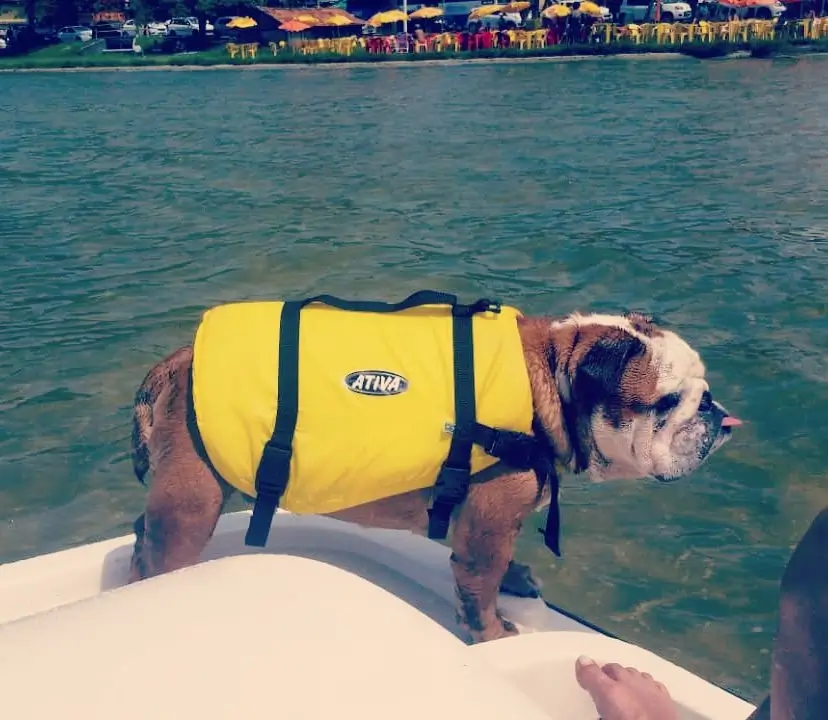
Yes. If an English or French Bulldog is anywhere near deep water, a life jacket should be considered essential.
A proper canine life jacket helps keep the dog’s head above water and reduces the physical effort needed to stay afloat. This is especially important for bulldogs, who tire quickly and struggle to maintain balance once fatigue sets in.
Even confident bulldogs can suddenly lose energy in water. A life jacket adds a critical safety margin that can prevent panic, inhalation of water, or worse.
Life jackets are not a replacement for supervision. They are an extra layer of protection, not a guarantee.

Can Bulldogs Swim in Pools?
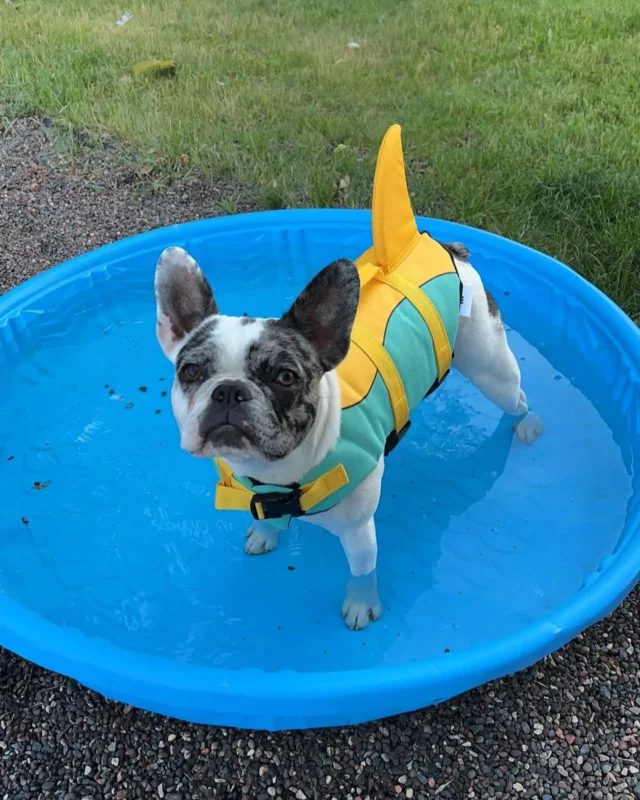
Pools can be one of the safest water environments for bulldogs—if they are set up correctly.
Shallow pools, kiddie pools, or pools with wide steps allow bulldogs to stand, walk, and cool off without needing to swim. This kind of controlled water exposure is ideal for hot days.
Deep pools become dangerous when a bulldog cannot touch the bottom or reach an exit easily. Bulldogs should always have a visible, accessible way out, such as steps or a ramp.
Bulldogs should never be left alone in a pool area, even if they have previously handled water well.

What Happens If a Bulldog Falls Into Deep Water?
If a bulldog unexpectedly falls into deep water, the situation can become critical very quickly.
Because bulldogs are front-heavy, they may tilt forward and struggle to keep their airway above water. Panic and rapid fatigue can follow within seconds.
This is why prevention matters more than reaction. Fences, pool covers, supervision, and controlled access are far more effective than trying to intervene after an accident happens.
Simple Water Safety Rules for English and French Bulldogs
These basic rules dramatically reduce risk:
- Never leave a bulldog unattended near water.
- Stick to shallow water where the dog can stand comfortably.
- Always provide an easy exit from pools.
- Use a properly fitted life jacket in deep or open water.
- Limit water time to short sessions and watch for signs of fatigue.
- Do not assume confidence equals swimming ability.
When these rules are respected, water exposure can be enjoyable, calming, and safe for bulldogs—without unnecessary risk.
For many French Bulldog owners, caring for the breed becomes part of their lifestyle, which is why we also created a guide about French Bulldog themed T-shirts designed for owners, inspired by real-life experiences with the breed.
Signs Your Bulldog Is in Trouble in Water
Recognizing distress early is the difference between a safe water experience and an emergency. Watch for these warning signs:
- Vertical body position: If your bulldog shifts from horizontal paddling to an upright, vertical position, they're losing the ability to swim. This is the most critical warning sign.
- Frantic paddling: Fast, splashing movements with no forward progress indicate panic and exhaustion.
- Head tilting back: When a bulldog strains to keep its nose above water by tilting its head backward, it's already struggling.
- Wide, unfocused eyes: A sign of panic — the dog is no longer processing its environment normally.
- Sudden silence: A bulldog that was snorting and splashing and suddenly goes quiet may be swallowing water.
- Slowing movements: Fatigue in bulldogs happens abruptly. The dog may go from active paddling to barely moving within seconds.
If you see any of these signs, remove your bulldog from the water immediately. Don't wait to see if they recover — they probably won't without help.
Best Life Jackets and Water Gear for Bulldogs
If your bulldog is going to be around water — and especially near pools, lakes, or beaches — investing in the right safety gear is non-negotiable. Here's what to look for:
Life Jacket Features for Bulldogs
- Front buoyancy panel: Critical for bulldogs. Standard dog life jackets distribute buoyancy evenly, but bulldogs need extra lift under the chest to counteract their front-heavy build.
- Top handle: A sturdy grab handle on the back lets you quickly lift your bulldog out of the water if needed.
- Adjustable straps: Bulldogs have a unique barrel-shaped torso. Look for jackets with multiple adjustment points to ensure a snug, secure fit.
- High-visibility color: Bright orange or yellow makes your dog easy to spot in water.
- Chin support: Some jackets include a chin float that helps keep the dog's head above water — especially useful for bulldogs.
Popular options include the Outward Hound Granby Splash (budget-friendly), Ruffwear Float Coat (premium), and EzyDog Doggy Flotation Device (excellent chest support). Always test the fit in shallow water before relying on it in deeper situations.

Frequently Asked Questions (FAQ) About Bulldogs and Swimming
Most English Bulldogs cannot swim safely without a life jacket. Even if they can paddle briefly, fatigue and loss of balance can happen quickly, making deep water dangerous.
French Bulldogs face the same physical limitations as English Bulldogs. Without a life jacket, deep water poses a serious risk, especially once the dog becomes tired.
Bulldogs can safely enjoy shallow pools where they are able to stand and exit easily. Deep pools should only be used with a life jacket and constant supervision.
Bulldogs do not immediately sink, but their front-heavy body structure makes it difficult to stay balanced and keep their head above water for extended periods.
No. Bulldogs are not natural swimmers. They were not bred for swimming and lack the body structure and endurance needed for safe, sustained swimming.
Bulldogs can be introduced to water in a controlled, shallow environment, but they should not be trained to swim like water-retrieving breeds. Safety and supervision matter more than teaching swimming skills.
Most bulldogs should limit water exposure to 5-15 minutes maximum, depending on conditions. In shallow water where they can stand, they may be comfortable longer. In any water requiring actual swimming, even with a life jacket, keep sessions under 5 minutes and watch closely for signs of fatigue.
Bulldog puppies should not be introduced to swimming until they are at least 4-6 months old, and even then, only in very shallow water under constant supervision. Puppies have even less body control and stamina than adult bulldogs. Start with a few inches of water and let the puppy explore at its own pace — never force it.
Individual variation exists, yes. Some bulldogs are more comfortable in water and can paddle more effectively than others. However, no bulldog should be considered a safe, independent swimmer. Even the most confident water-loving bulldog can fatigue suddenly and get into trouble. Always supervise and use a life jacket in deep water regardless of your dog's apparent ability.
Absolutely! Bulldogs can enjoy the beach safely by wading in shallow water, walking on wet sand, and cooling off in the surf zone. Avoid letting them venture into water deeper than their chest, keep them hydrated (bring fresh water — don't let them drink saltwater), and provide shade since bulldogs overheat easily. A life jacket is recommended if waves are present.