




Table of Contents
What Is a Chocolate British Bulldog?
A chocolate British bulldog is an English bulldog that carries genes responsible for a deep brown or chocolate-colored coat. Despite the name, it is not a distinct breed or officially separate classification. The term simply describes a coat variation that results from specific genetic combinations.
Structurally and behaviorally, chocolate British bulldogs are identical to other English bulldogs. They share the same compact, muscular body, broad chest, short legs, and characteristic facial features. Traits such as their stocky build and distinctive tail shape remain consistent across coat colors, as explained in our English Bulldog Tail Guide.
Temperament is also unaffected by coat color. Chocolate British bulldogs are known for being calm, loyal, and affectionate companions, especially when properly socialized. Like all bulldogs, they thrive in close contact with their owners and are best suited for homes that understand the breed’s unique needs and limitations.
It is important to note that the chocolate coat does not change how the dog behaves, ages, or bonds with people. What truly defines a chocolate British bulldog is responsible breeding, proper care, and an environment that supports the health and comfort of this iconic breed.
Chocolate vs Tri-Color vs Lilac Bulldogs: Key Differences Explained
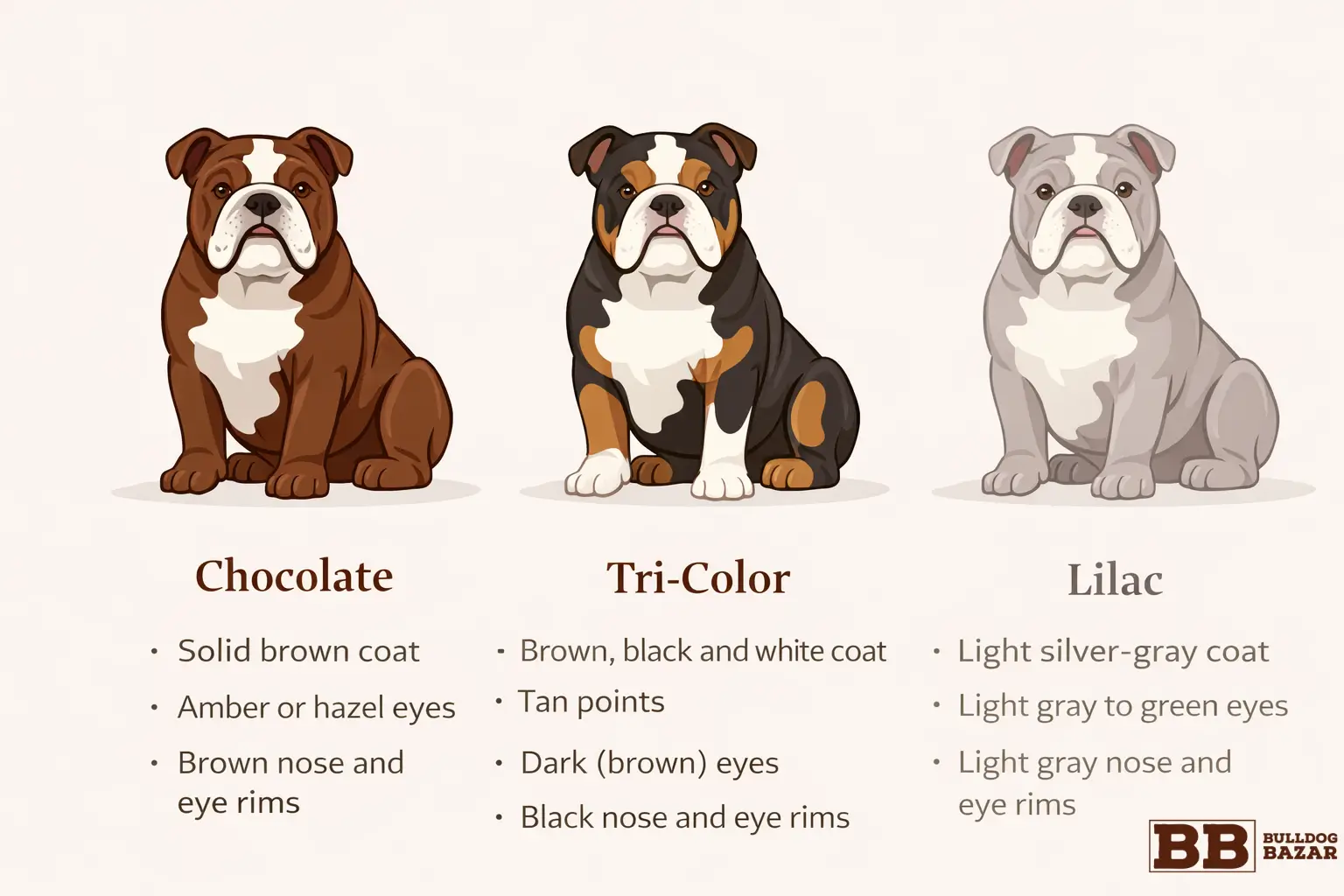
Coat color variations such as chocolate, tri-color, and lilac bulldogs are often confused due to visual similarities and overlapping genetic traits. While these colors can appear related, they are produced by different genetic combinations and result in distinct appearances.
- Chocolate bulldogs have a solid brown coat caused by recessive genes that alter black pigmentation into a chocolate or liver tone. This color typically affects the nose, paw pads, and eye rims, which often appear brown rather than black. Eye color in chocolate bulldogs can range from light amber to hazel, especially in puppies.
- Tri-color bulldogs are defined not by a single coat color, but by a three-color pattern—usually a base color combined with tan points and white markings. A chocolate tri-color bulldog, for example, will display chocolate as the base color with tan accents above the eyes, on the cheeks, legs, and chest, along with white areas. The presence of tan points distinguishes tri-color bulldogs from solid chocolate ones.
- Lilac bulldogs are often mistaken for chocolate due to their lighter appearance, but lilac is the result of an additional dilution gene acting on chocolate. This creates a soft gray or silver-brown coat with a cooler tone. Lilac bulldogs commonly have lighter eye colors, including gray, green, or pale amber, particularly during early development.
While coat color and eye color can vary between chocolate, tri-color, and lilac bulldogs, these traits do not determine temperament or overall health. Differences are primarily aesthetic, and responsible breeding practices remain far more important than color classification.

Are Chocolate British Bulldogs Rare or Officially Recognized?
Chocolate British bulldogs are often described as rare, but this perception deserves clarification. The chocolate coat results from recessive genetic traits, meaning both parent dogs must carry specific genes for the color to appear. This makes the coat less common, though not truly rare in a biological sense.
When it comes to official recognition, traditional British and English bulldog breed standards focus on classic coat colors such as brindle, fawn, white, and pied. Chocolate coloring typically falls outside these traditional standards. As a result, chocolate British bulldogs may not be eligible for conformation shows, even though they are still purebred bulldogs.
It is important to understand that lack of show recognition does not affect a bulldog’s quality of life, temperament, or suitability as a companion. Many bulldog owners prioritize health, personality, and ethical breeding practices over coat color or show eligibility.
Because of their appearance and limited acceptance in breed standards, chocolate British bulldogs are sometimes marketed as exclusive or rare. Prospective owners should look beyond marketing claims and focus on responsible breeding, transparency, and the overall well-being of the dog.


Genetics Behind the Chocolate Coat in British Bulldogs
The chocolate coat in British bulldogs is the result of specific genetic combinations rather than a separate bloodline or breed variation. This color typically appears when a bulldog inherits recessive genes from both parents, which influence how pigment is expressed in the coat.
In simple terms, chocolate coloring occurs when the genes responsible for black pigmentation are altered, producing a brown or chocolate appearance instead. Because these genes are recessive, chocolate-coated bulldogs are less commonly seen and require careful pairing during breeding.
It is important to note that coat color genetics do not affect the structural traits that define the English bulldog. Body shape, facial features, tail structure, and temperament remain consistent regardless of color. Genetic responsibility becomes especially important to avoid prioritizing appearance over health.
Ethical breeders focus on health testing, genetic diversity, and overall well-being rather than breeding solely for rare or fashionable coat colors. Responsible breeding practices help reduce the risk of inherited health conditions commonly associated with the bulldog breed.
Health Considerations in Chocolate British Bulldogs
Health considerations in chocolate British bulldogs are largely the same as in other English bulldogs. Most health concerns associated with the breed are related to their physical structure rather than coat color. Understanding these traits is essential for providing proper care and ensuring long-term well-being.
One of the most common considerations is respiratory health. Like all bulldogs, chocolate British bulldogs are brachycephalic, meaning they have shortened airways that can make breathing more difficult, especially in hot or humid conditions. Owners should be mindful of exercise intensity and environmental temperature.
Joint health is another important factor. The breed’s compact and muscular build places additional stress on hips and joints over time. Maintaining a healthy weight and providing moderate, low-impact exercise can help reduce strain and support mobility.
Skin care is also essential, particularly around facial folds. Regular cleaning helps prevent irritation and infections. While coat color does not increase health risks, responsible care and routine veterinary checkups play a key role in keeping chocolate British bulldogs healthy.
Temperament and Daily Life with a Chocolate British Bulldog
Chocolate British bulldogs share the same temperament traits that make English bulldogs such popular companions. They are known for their calm, loyal, and affectionate nature, often forming strong bonds with their owners and preferring close human contact throughout the day.
While generally relaxed, bulldogs still benefit from daily mental and physical stimulation. Short walks, gentle play, and controlled social interactions help maintain balance and prevent boredom. When properly introduced, they can enjoy social environments, including public spaces and dog parks, as long as their physical limits are respected.
Socialization plays a key role in shaping positive behavior. Early exposure to other dogs, people, and new environments can help bulldogs feel more confident and comfortable. Owners interested in improving their bulldog’s social skills may find practical guidance in our article on helping English bulldogs make friends at the dog park.
Daily life with a chocolate British bulldog often revolves around routine, comfort, and companionship. They adapt well to apartment living and quieter households, making them suitable for owners who appreciate a relaxed but deeply loyal canine companion.


Choosing a Responsible Breeder and Setting Real Expectations
Choosing a chocolate British bulldog should always begin with realistic expectations and a focus on responsible breeding. Coat color alone should never be the primary reason for selecting a bulldog, as health, temperament, and ethical practices play a far more important role in long-term well-being.
Reputable breeders prioritize health screenings, genetic transparency, and the overall quality of life of their dogs. Prospective owners should feel comfortable asking questions about breeding practices, medical history, and living conditions. A responsible breeder will provide clear answers and avoid exaggerated claims about rarity or exclusivity.
It is also important to understand the lifestyle commitment involved in owning a bulldog. Their physical structure requires thoughtful care, a stable routine, and environments that prioritize comfort and safety. Learning from the experiences of other owners can help set realistic expectations, as highlighted in our article on things only English bulldog owners understand.
When chosen thoughtfully and cared for properly, a chocolate British bulldog can be a deeply rewarding companion. Focusing on health, temperament, and ethical ownership ensures a positive experience for both the dog and its owner.
Celebrating the British Bulldog Lifestyle
For many owners, living with a British bulldog goes beyond daily care and companionship. The breed often becomes part of personal identity, routines, and lifestyle. From home décor to clothing, bulldog-inspired items are a way for enthusiasts to celebrate their connection with the breed.
Whether you share your home with a chocolate British bulldog or simply admire the breed, exploring bulldog-themed apparel and accessories is a popular way to express that appreciation. Items designed specifically for bulldog lovers often reflect the humor, character, and iconic appearance that make the breed so recognizable.
If you’re interested in bulldog-inspired products, you can explore our curated collection of English Bulldog T-shirts, created for owners and fans who want to showcase their love for the breed. For gift ideas, our selection of Bulldog Gifts includes unique items suitable for bulldog enthusiasts around the world.
These products are designed to complement the bulldog lifestyle without compromising comfort or authenticity, making them a natural extension of the bond between owners and their dogs.
Conclusion
Chocolate British bulldogs stand out for their distinctive appearance, but their true value lies in the traits shared by all English bulldogs: loyalty, calm temperament, and strong companionship. Understanding the genetics, health considerations, and lifestyle needs of the breed helps owners make informed and responsible decisions.
By focusing on proper care, ethical breeding, and realistic expectations, owners can enjoy a rewarding relationship with their bulldog while celebrating the breed’s unique character both at home and beyond.
Frequently Asked Questions (FAQ) About Chocolate British Bulldogs
Chocolate British bulldogs are less common because the coat color depends on recessive genes inherited from both parents. While they may appear rare, they are not considered extremely rare within responsible breeding programs.
Traditional British and English bulldog breed standards do not officially recognize chocolate as a standard coat color. However, chocolate bulldogs can still be purebred and healthy companions despite not being eligible for conformation shows.</p>
Health concerns in chocolate British bulldogs are the same as in other English bulldogs. Most issues are related to the breed’s physical structure, such as breathing, joint health, and heat sensitivity, rather than coat color.</p>
No. Coat color does not influence temperament or personality. Behavior is shaped by genetics, training, socialization, and environment, not by coat color.</p>
Yes. Like other English bulldogs, they adapt well to apartment living when provided with daily walks, mental stimulation, and a comfortable indoor environment.</p>
Some breeders price chocolate bulldogs higher due to demand and limited availability. However, higher price does not guarantee better health, and buyers should prioritize ethical breeding practices over coat color.</p>