 Accessories
 Bags & Backpacks
 Clothing
 Drinkware
 Home & Living
 Pet Products
Fluffy French Bulldog: What It Is, Why It’s Rare, and What to Know Before You Fall in Love

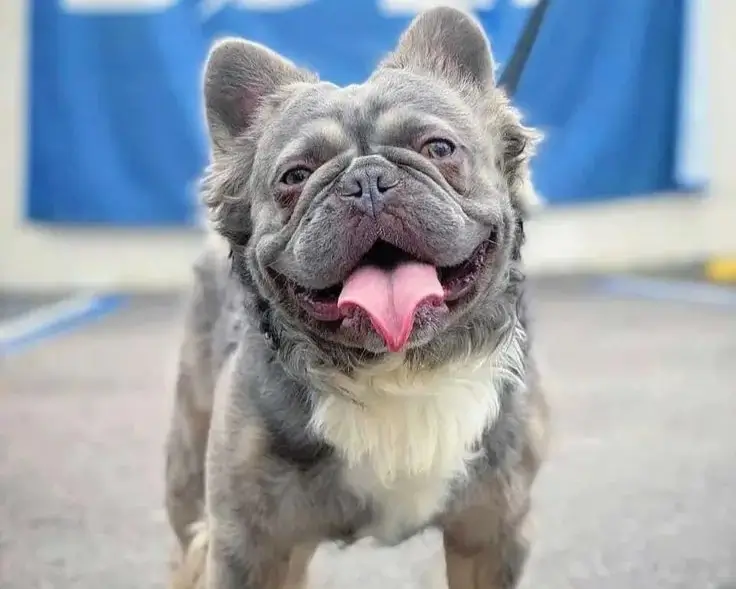
The Fluffy French Bulldog looks like someone took a classic Frenchie and added a soft “teddy bear” upgrade. Same compact body, same big-bat ears, same clown energy—just with a longer, fluffier coat that turns heads everywhere.
But here’s the part most pages skip: “fluffy” isn’t a separate breed. It’s a coat variation tied to genetics, and that affects everything from rarity (and price) to what’s considered “standard” by major kennel clubs. If you’ve been seeing fluffy Frenchies all over social media and wondering if they’re real, why they’re so expensive, or whether they’re healthy—this guide breaks it down in plain English.
In this article, you’ll learn what makes a Frenchie “fluffy,” how the long-hair trait happens, what “rare” actually means in practice, and the key questions to ask before you commit to one (or get emotionally adopted by one).
Table of Contents
Why Are Fluffy French Bulldogs Long-Haired?
Fluffy French Bulldogs have long hair because they carry a specific genetic trait that affects coat length. Unlike standard French Bulldogs, which have short, smooth coats, fluffy Frenchies inherit a recessive long-hair gene from both parents.
This gene doesn’t change the breed itself—it only affects how the coat grows. Structurally, temperament-wise, and behaviorally, a fluffy French Bulldog is still a Frenchie. The difference is purely cosmetic, even though it dramatically changes how rare (and sought-after) these dogs are.
Because the long-hair gene is recessive, two standard-looking French Bulldogs can produce a fluffy puppy if both parents carry the gene. This is one of the reasons fluffy Frenchies often surprise breeders and buyers alike.
What Is a Fluffy French Bulldog?
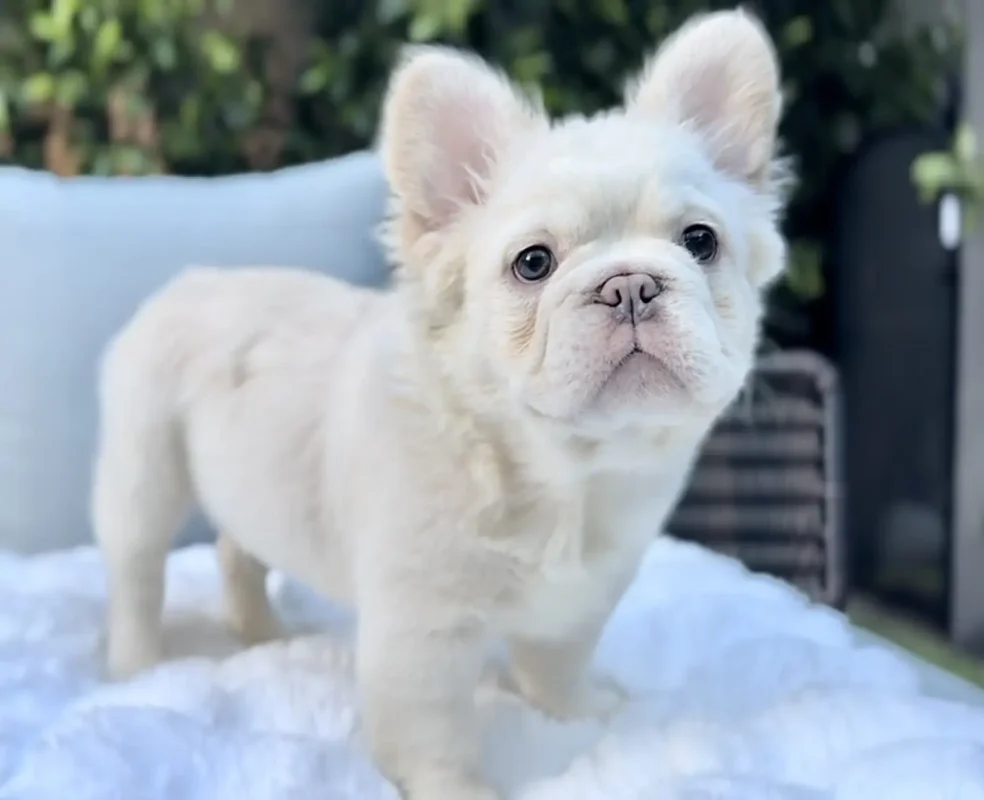
A Fluffy French Bulldog is a purebred French Bulldog with a longer, softer coat than the standard short-haired Frenchie. Despite the nickname, “fluffy” does not describe a separate breed—it simply refers to a coat variation caused by genetics.
In every other aspect, a fluffy Frenchie is the same as a traditional French Bulldog. They share the same compact body structure, bat-like ears, personality traits, and overall temperament. The only visible difference is the length and texture of the fur.
Because this long-hair trait is uncommon, fluffy French Bulldogs are often described as rare. That rarity, combined with their striking appearance, is what has made them especially popular on social media and among breed enthusiasts.
Is the Fluffy French Bulldog Rare?
Yes, Fluffy French Bulldogs are considered rare—but not because they are a separate breed or newly created type. Their rarity comes from genetics. The long-hair trait is recessive, which means a puppy must inherit the gene from both parents to develop a fluffy coat.
Many French Bulldogs carry the gene without showing it. As a result, two standard-looking Frenchies can produce a fluffy puppy unexpectedly, but this doesn’t happen often. This low probability is what keeps fluffy French Bulldogs uncommon.
Rarity, however, doesn’t mean exclusivity or official classification. Fluffy French Bulldogs are still purebred French Bulldogs, just with an uncommon coat variation. Their limited availability is what drives interest—and eventually higher prices—rather than any difference in breed status.
Fluffy French Bulldog vs Standard Frenchie
The main difference between a Fluffy French Bulldog and a standard Frenchie is coat length. Fluffy Frenchies have longer, softer fur, while standard French Bulldogs have the short, smooth coat most people recognize.
Beyond appearance, there are no meaningful differences. Both share the same body structure, personality, energy levels, and temperament. A fluffy Frenchie is not taller, heavier, or more athletic—it simply looks different because of its coat.
It’s also important not to confuse coat length with coat color. “Fluffy” refers to fur texture, not color. Colors like fawn, brindle, or cream exist in both standard and fluffy French Bulldogs. For example, a fawn French Bulldog can have either a short or a long coat.
In short, fluffy French Bulldogs aren’t a different type of dog—they’re a visual variation of the same breed, shaped by genetics rather than breeding purpose.
Are Fluffy French Bulldogs Recognized by Kennel Clubs?
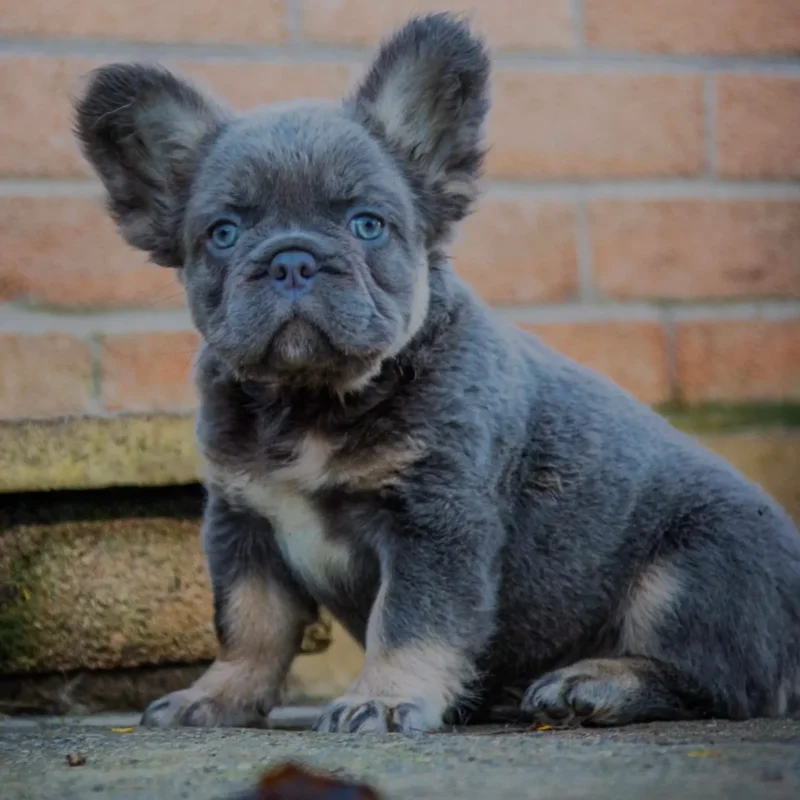
Fluffy French Bulldogs are recognized as purebred French Bulldogs, but their long coat is not accepted under most official breed standards. Major kennel clubs classify French Bulldogs as a short-haired breed, which means the fluffy coat is considered a non-standard trait.
This does not mean fluffy Frenchies are mixed breeds or illegitimate. They come from the same bloodlines and meet the same structural and temperamental criteria as standard French Bulldogs. The distinction exists purely for show standards, not for health, behavior, or pedigree.
Because of this, fluffy French Bulldogs are typically not eligible for conformation shows that strictly enforce breed standards. However, they can still be registered as French Bulldogs and participate in other activities where coat length is not a factor.
Health and Genetics: What to Know About Fluffy French Bulldogs
The fluffy coat itself does not make French Bulldogs more or less healthy. The long-hair trait is purely genetic and affects only how the fur grows, not how the dog’s body functions. Scientific research on canine genetics shows that coat length in dogs is influenced by variants in the FGF5 gene, which impacts hair growth rather than skeletal development, organ formation, or temperament.
Like all French Bulldogs, fluffy Frenchies are a brachycephalic breed. This means they may be more sensitive to heat, strenuous exercise, and breathing challenges. These traits are shared across the breed and are not caused by the fluffy gene or by having a longer coat.
Some online claims mistakenly associate fluffy French Bulldogs with higher rates of congenital defects or serious health problems. However, there is no scientific evidence linking the long-hair gene itself to issues such as heart defects, cleft palate, or structural abnormalities. When health problems do occur, they are far more often related to irresponsible breeding practices rather than coat length.
From a care perspective, the longer coat does require slightly more maintenance. Regular brushing helps prevent tangles, removes loose hair, and keeps the coat clean. Grooming needs are primarily a cosmetic and comfort-related consideration, not a medical risk.
It’s also important to distinguish breed standards from health. According to the American Kennel Club (AKC) breed standard, French Bulldogs are expected to have a short, smooth coat. A long coat is considered non-standard for show purposes, but this classification does not determine whether a dog is mixed or unhealthy.
Genetics and breeding practices play a far bigger role in a French Bulldog’s long-term health than coat type. Responsible breeders focus on health testing, genetic diversity, and overall well-being instead of prioritizing rarity or appearance.
When properly bred and cared for, fluffy French Bulldogs are no more fragile than standard Frenchies. Their quality of life depends far more on responsible breeding, routine veterinary care, and daily lifestyle than on coat length alone.
Do Fluffy French Bulldogs Shed More?
Fluffy French Bulldogs do shed, but not significantly more than standard French Bulldogs. The difference is mostly visual. Because their hair is longer, shedding can appear more noticeable, even when the actual amount of hair loss is similar.
Like all Frenchies, fluffy French Bulldogs are moderate shedders. Shedding tends to increase during seasonal changes, especially in spring and fall. Regular brushing helps manage loose hair and prevents it from spreading around the home.
The fluffy coat does require slightly more grooming than a standard Frenchie’s short coat. Weekly brushing is usually enough to keep shedding under control and maintain the coat’s appearance. This extra maintenance is part of owning a fluffy Frenchie, but it’s manageable for most owners.
It’s important to note that fluffy French Bulldogs are not hypoallergenic. Their longer coat does not reduce allergens, and people with dog allergies should not assume the fluffy variety will be easier to tolerate.
Fluffy French Bulldog Price in the US
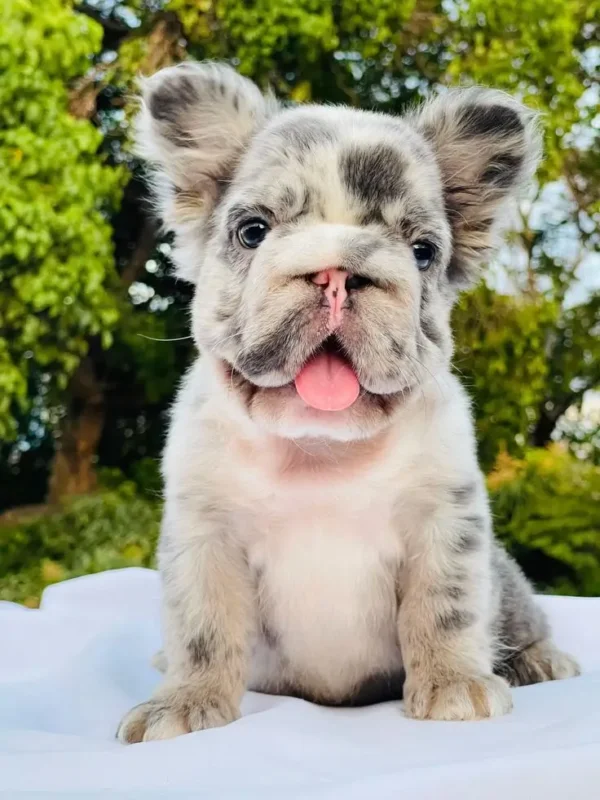
Fluffy French Bulldogs are typically more expensive than standard Frenchies. This higher price is driven by rarity, genetics, and demand—not by differences in breed status or temperament.
Because the long-hair gene is recessive and uncommon, producing a fluffy Frenchie is less predictable. Fewer puppies, combined with strong interest from enthusiasts and social media exposure, naturally pushes prices higher.
Rather than focusing on a single number, it’s more accurate to understand the factors that influence cost, including lineage, breeder practices, location, and long-term care. For a complete and up-to-date breakdown of French Bulldog pricing in the US, including how fluffy Frenchies compare to standard ones, see our French Bulldog price guide.
Why Is Everyone Obsessed With Fluffy Frenchies?
Fluffy French Bulldogs combine everything people already love about Frenchies with an extra visual twist. The longer coat gives them a softer, almost plush appearance, which naturally stands out in photos and videos.
Social media has played a major role in this obsession. Fluffy Frenchies photograph differently than standard French Bulldogs, often looking more expressive and eye-catching. That uniqueness has helped them spread quickly across platforms, reinforcing their “rare” and desirable image.
Beyond looks, fluffy Frenchies still have the same playful, affectionate personality that made the breed famous in the first place. The appeal isn’t just about fluff—it’s about a familiar breed presented in an unexpected way.
This popularity has also influenced French Bulldog culture more broadly, from fashion and accessories to how owners express their connection to the breed. If you’re curious how Frenchies have become style icons in their own right, our French Bulldog clothing and T-shirt guide explores that cultural side in more detail.
Frequently Asked Questions (FAQ) – Fluffy French Bulldog
They can be — but it depends on the dog. Fluffy French Bulldogs can be purebred French Bulldogs. The long coat comes from a recessive long-hair gene and does not, by itself, mean a dog is mixed. However, because the “fluffy” look became popular, some dogs marketed as fluffy Frenchies may come from crossbreeding or irresponsible breeding practices.
The only way to confirm whether a fluffy French Bulldog is truly purebred is through verified pedigree records or genetic testing. Structurally and temperament-wise, a genetically pure fluffy French Bulldog is the same breed as a standard French Bulldog — the difference is coat length only.
Fluffy French Bulldogs are moderate shedders, similar to standard Frenchies. Their longer coat can make shedding more noticeable, but the actual amount of hair loss is not significantly higher. Regular brushing helps control loose hair and keeps shedding manageable.
No. Fluffy French Bulldogs are not hypoallergenic. Their longer coat does not reduce allergens, and they still produce dander like other dogs. People with dog allergies should not assume fluffy Frenchies will be easier to tolerate.
Fluffy French Bulldogs are more expensive mainly due to rarity and demand. The long-hair gene is recessive, making fluffy puppies less common. Limited availability, responsible breeding costs, and popularity on social media all contribute to higher prices.
Fluffy French Bulldogs are recognized as French Bulldogs, but their long coat is considered a non-standard trait by most kennel clubs. This affects show eligibility, not breed purity or registration status.
Yes. Fluffy French Bulldogs have the same affectionate, playful, and people-oriented personality as standard Frenchies. Coat length does not affect temperament, making them well-suited for families, apartments, and companionship-focused households.