

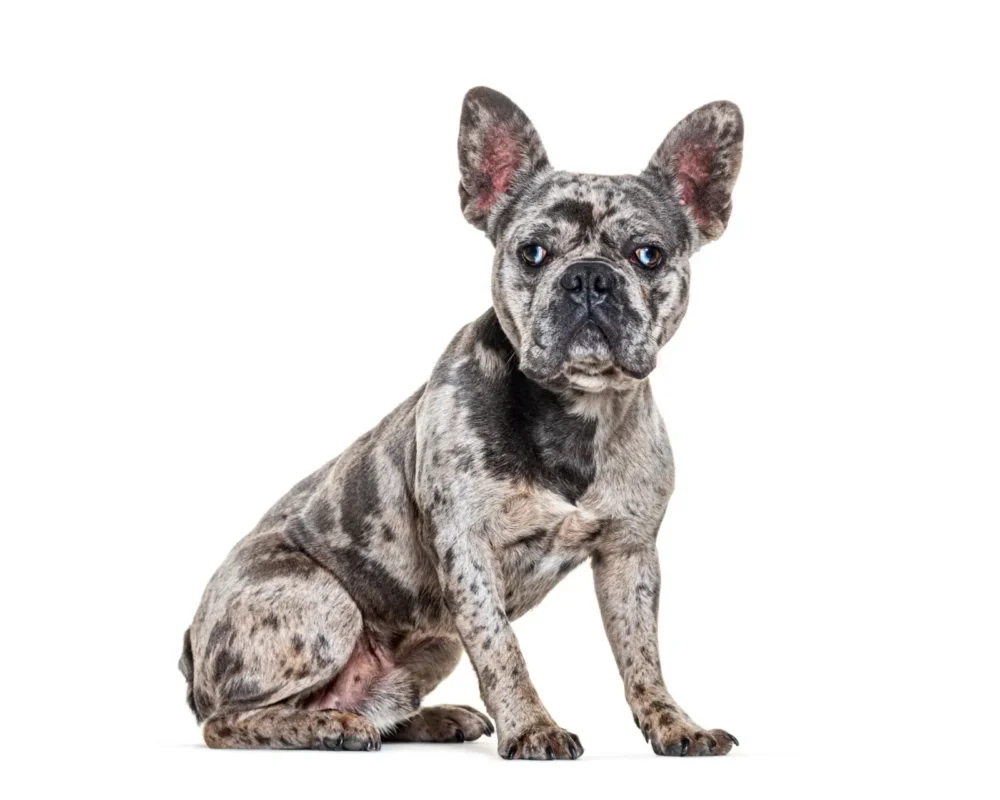

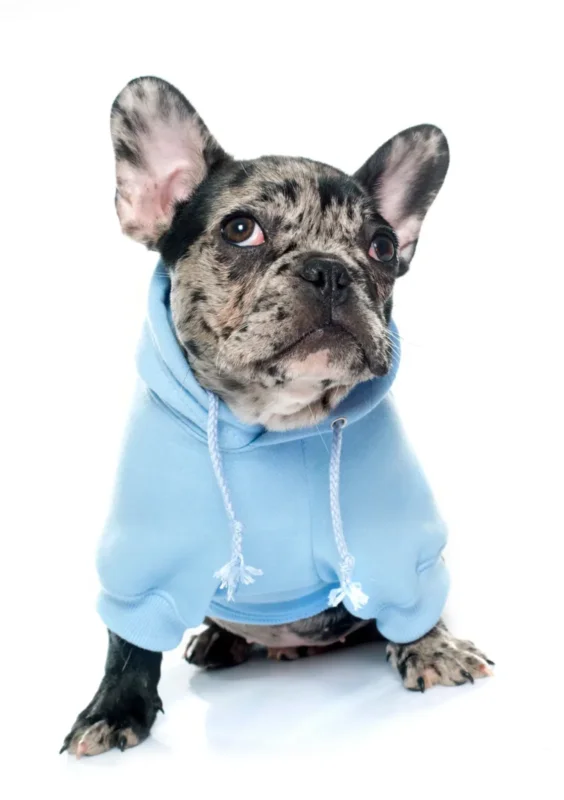
The merle French Bulldog has become one of the most talked-about “colors” in the breed — and also one of the most misunderstood. Scroll social media for five minutes and you’ll see merle puppies priced like luxury items, surrounded by hype, buzzwords, and questionable claims. But merle isn’t just a trendy look. It’s a specific genetic pattern with real implications for health, breeding ethics, and even how official breed standards treat it.
In this guide, we’ll break down what “merle” actually means, how the gene works, which merle variations you’ll see (like blue merle, lilac merle, and chocolate merle), and what responsible owners should know before buying into the hype. If you want the bigger picture on the breed overall — temperament, care, and what living with a Frenchie is really like — start with our complete French Bulldog guide.
The goal here isn’t to sell you a color. It’s to give you clear, practical information so you can make a smart decision — for you and for the dog.
Table of Contents
What Is a Merle French Bulldog?
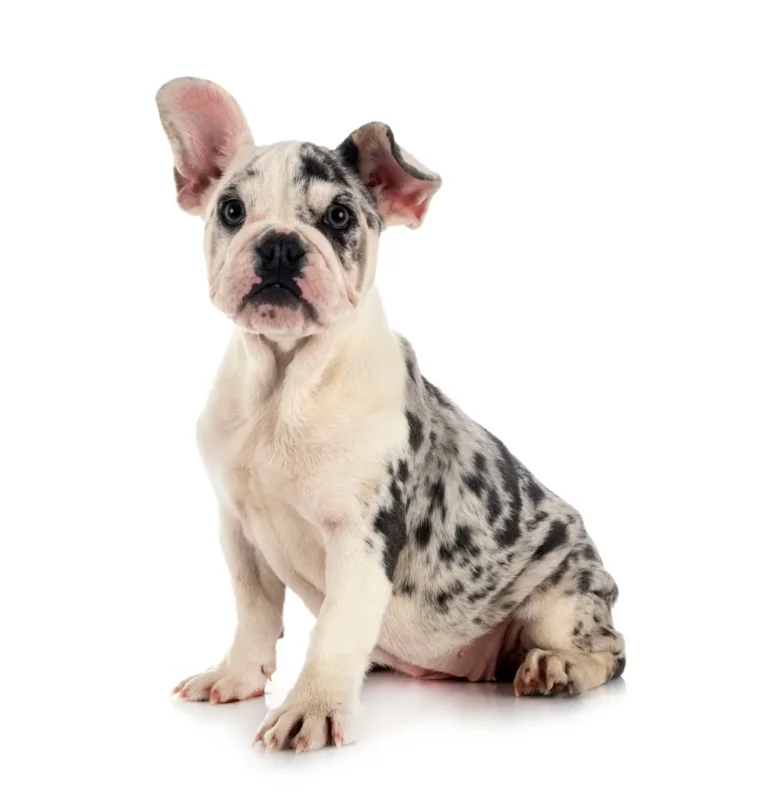
A merle French Bulldog is a French Bulldog that displays the merle coat pattern, a genetic effect that creates irregular patches of diluted pigment across the fur. This marbled appearance can affect coat color, eye color, and facial markings, which is why merle dogs often look visually striking compared to standard French Bulldog colors.
It’s important to understand that merle is not a traditional color like fawn, brindle, or cream. Instead, it is caused by a specific genetic variation that alters how pigment is distributed in the coat. Because of this, merle is often misunderstood as a simple “rare color,” when in reality it involves deeper genetic and ethical considerations.
You will frequently see the term merle combined with other color descriptions, such as blue merle or lilac merle. In these cases, the name usually refers to the dog’s base color with the merle pattern layered on top, rather than a completely separate color category.

The Merle Gene Explained (Simple Genetics)
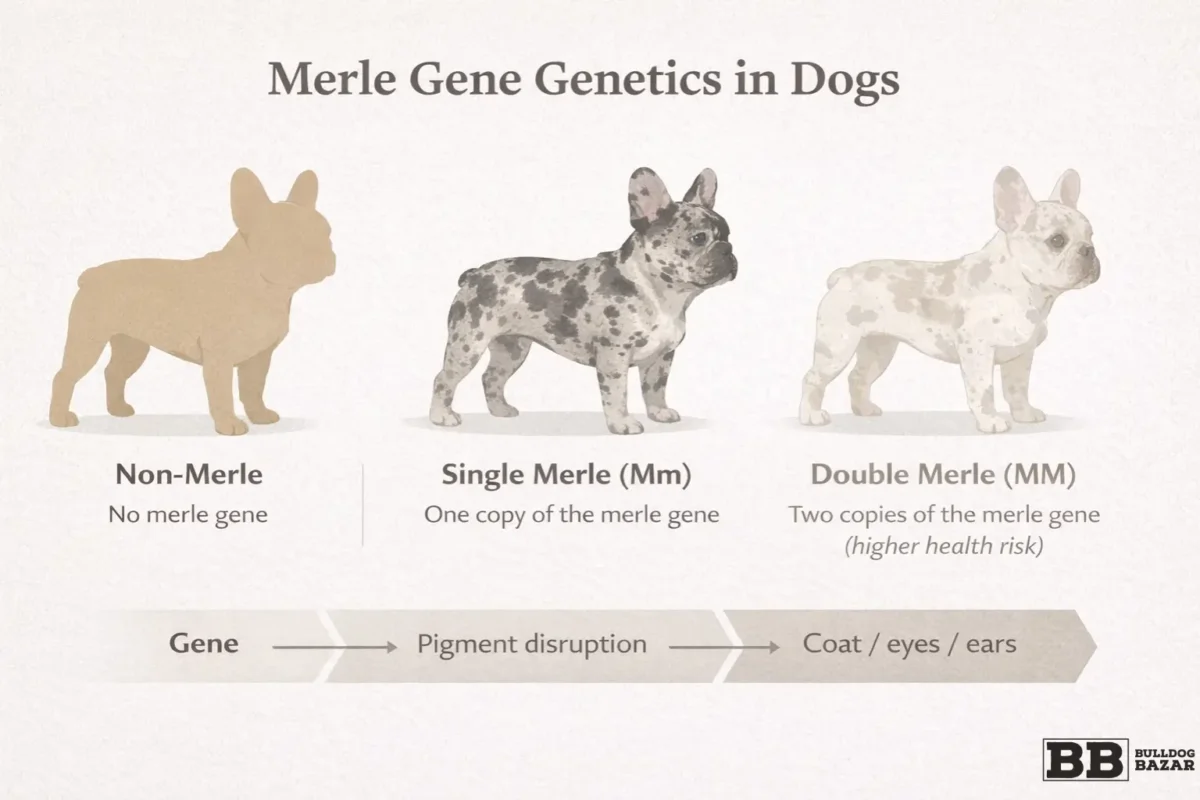
The merle pattern is caused by a genetic mutation that affects how pigment is distributed in a dog’s coat. This gene works by partially diluting sections of the base color, creating the uneven, patchy look commonly described as marbled or mottled. The effect can vary widely from one dog to another, which is why no two merle French Bulldogs look exactly the same.
Genetically, merle is considered a dominant trait. This means a dog only needs to inherit one copy of the merle gene to show the pattern. However, when two merle dogs are bred together, there is a risk of producing what is known as a “double merle,” which significantly increases the likelihood of serious health issues.
The merle gene does not just influence coat color. It can also affect eye pigmentation and, in some cases, hearing and vision. This is why merle is treated differently from standard French Bulldog colors in breeding discussions. Understanding this genetic mechanism is essential for separating responsible breeding practices from purely aesthetic trends.
Merle Color Variations in French Bulldogs
Merle French Bulldogs are often described using combinations of color terms, which can be confusing at first glance. These names usually reflect the dog’s base color combined with the merle pattern, rather than entirely separate color categories.
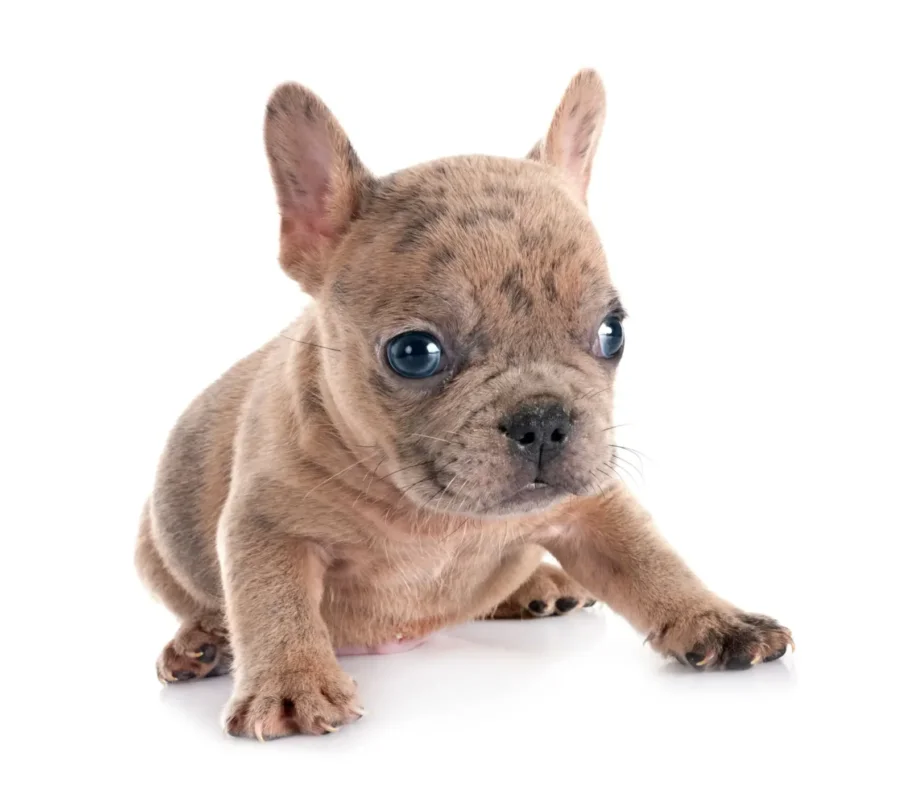
Common variations include blue merle, lilac merle, and chocolate merle. In each case, the underlying color determines the tone of the coat, while the merle gene creates lighter and darker patches across it. Differences in contrast, eye color, and markings are normal and expected within these variations.
Because these labels are frequently used in marketing, it’s important to remember that visual appearance alone does not indicate health, quality, or responsible breeding. The genetics behind the pattern matter far more than how rare or striking a particular color combination may seem.

Health Risks Associated With the Merle Gene
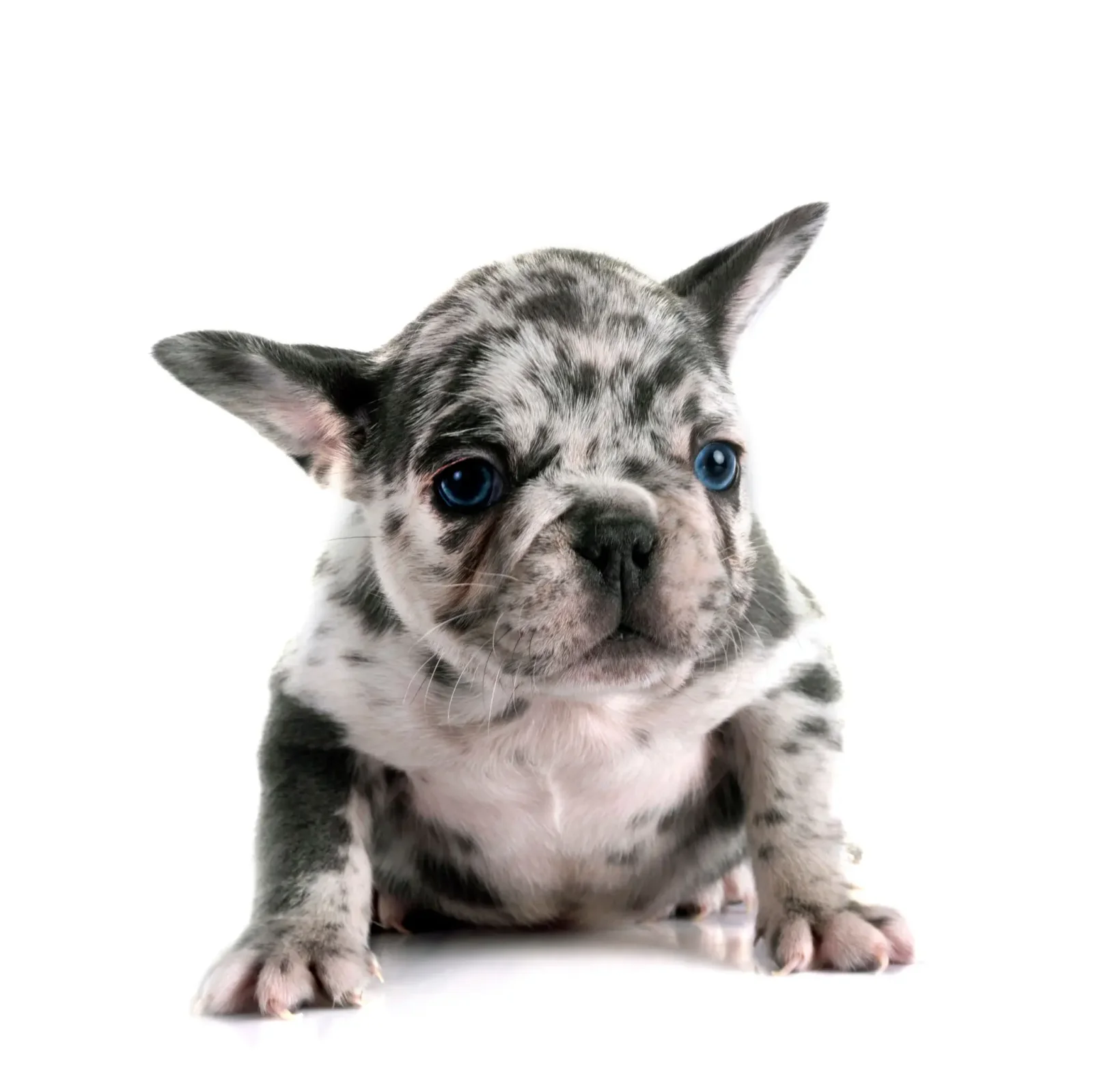
The main concern surrounding merle French Bulldogs is not their appearance, but the potential health risks linked to the merle gene itself. While a single copy of the gene can produce the merle pattern, it may also interfere with normal pigment development in the eyes and inner ears.
Hearing and Vision Issues
Merle dogs have a higher statistical risk of congenital deafness and certain vision abnormalities, especially when pigment is reduced around the eyes or ears. These issues can range from mild impairment to more severe sensory loss, depending on how the gene is expressed.
Double Merle Risks
The most serious problems occur when two merle dogs are bred together. Puppies that inherit two copies of the merle gene, often called “double merles,” face a significantly increased risk of deafness, blindness, and other developmental defects. This is one of the primary reasons responsible breeders strongly discourage merle-to-merle breeding.
It’s important to note that not every merle French Bulldog will experience health problems. However, the risks are well-documented enough that merle cannot be treated as a purely cosmetic trait.
Are Merle French Bulldogs Purebred?
This is one of the most common and controversial questions surrounding merle French Bulldogs. In short, merle French Bulldogs can exist as French Bulldogs, but the merle gene itself is not historically part of the traditional French Bulldog gene pool.
Because the merle pattern does not naturally appear in the breed’s documented history, its presence is widely believed to come from crossbreeding at some point in the past. While a merle dog may look and behave like a French Bulldog, this genetic detail is why the term “purebred” becomes complicated in discussions about merle.
For many experts, purity is less about appearance and more about documented lineage and genetic consistency. This distinction plays a major role in how kennel clubs and breed organizations treat merle French Bulldogs today.

Why Merle French Bulldogs Are Not AKC Recognized
One of the clearest signals that merle is treated differently from other French Bulldog variations is its lack of recognition by major kennel clubs, including the American Kennel Club (AKC). Breed standards are built around historically documented traits, and the merle pattern does not appear in the traditional development of the French Bulldog.
This does not mean merle French Bulldogs are “not real dogs” or incapable of being healthy companions. It simply reflects that the merle gene itself falls outside the established breed standard. In contrast, other debated traits such as blue or fluffy French Bulldogs are widely discussed but still considered variations within the breed, even when they remain controversial among breeders.
For example, traits like the long coat seen in the fluffy French Bulldog or the blue coloration are generally explained through recessive genes already present in the breed’s genetic background. Merle, however, introduces a genetic mechanism that does not follow the same historical or biological path.
Merle French Bulldog Price: Why Are They So Expensive?
Merle French Bulldogs are often priced significantly higher than standard-colored Frenchies. This premium is largely driven by rarity marketing, visual appeal, and demand rather than proven improvements in health, temperament, or longevity.
Because merle is not a recognized standard trait, pricing is rarely based on objective breeding benchmarks. Instead, it is influenced by exclusivity, social media exposure, and buyer perception. This is very different from how pricing typically works for French Bulldogs as a breed overall, where factors like lineage, health testing, and responsible breeding practices play a larger role.
If you want a broader view of what actually affects cost across the breed — regardless of color or pattern — our detailed French Bulldog price guide explains how genetics, demand, and ethics intersect in real-world pricing.
Ethics of Breeding Merle French Bulldogs
The ethics of breeding merle French Bulldogs is where most responsible discussions eventually land. The concern is not about the dogs themselves, but about how and why they are bred. When appearance and profit outweigh health considerations, the risk to the animals increases.
Ethical breeding prioritizes genetic testing, avoids merle-to-merle pairings, and places long-term welfare above short-term trends. Without these safeguards, the merle pattern can become a liability rather than a harmless variation.
Understanding these ethical boundaries helps potential owners move beyond hype and make choices that support responsible breeding practices, regardless of coat color or visual appeal.

Does Coat Color Affect French Bulldog Personality?
Despite the strong focus on appearance, coat color does not determine a French Bulldog’s personality. Merle French Bulldogs share the same core behavioral traits as any other Frenchie, including affection toward their owners, a playful temperament, and a strong desire for human companionship.
Temperament is shaped primarily by genetics beyond coat color, early socialization, training, and the environment in which the dog is raised. This means a merle French Bulldog is no more energetic, stubborn, or calm than a fawn, brindle, blue, or fluffy French Bulldog by default.
If personality and daily life with the breed are your main concerns, our in-depth guide on French Bulldog personality explains what owners can realistically expect, regardless of color or pattern.
Final Thoughts: Education Over Hype
The merle French Bulldog sits at the intersection of genetics, ethics, and modern demand. While the pattern can be visually striking, it raises important questions that go far beyond aesthetics. Understanding how the merle gene works, the health risks involved, and why it is treated differently from other variations is essential for making responsible decisions.
Rather than focusing on rarity or trend value, prospective owners should prioritize health, transparency, and ethical breeding practices. A well-bred French Bulldog’s quality of life matters far more than the uniqueness of its coat.
For a complete, balanced overview of the breed — including care, temperament, health considerations, and what living with a French Bulldog is really like — we recommend starting with our complete French Bulldog guide.
Frequently Asked Questions (FAQ) - Merle French Bulldog
Merle French Bulldogs are uncommon, but their rarity is often exaggerated by marketing. The merle pattern is not naturally established in the breed, which is why it appears less frequently than standard colors like fawn or brindle.
No. Merle French Bulldogs are not recognized by the American Kennel Club (AKC). The merle pattern falls outside the official French Bulldog breed standard and is not accepted for registration.
This is debated. While a merle French Bulldog may look and behave like a French Bulldog, the merle gene is not historically part of the breed. For this reason, many experts question the classification of merle French Bulldogs as truly purebred.
Merle French Bulldogs can have a higher risk of health issues related to hearing and vision, especially if bred irresponsibly. The risks increase significantly in double merle pairings, which is why ethical breeding practices are critical.
A double merle French Bulldog inherits two copies of the merle gene, usually from two merle parents. These dogs face a much higher risk of congenital deafness, blindness, and other serious health problems.
Higher prices are driven mainly by demand, visual appeal, and perceived rarity rather than proven health or quality advantages. Pricing is often influenced more by marketing than by responsible breeding standards.
No. Coat color does not affect personality. Merle French Bulldogs generally share the same temperament traits as other French Bulldogs, including affection, playfulness, and strong attachment to their owners.
No. Blue and fluffy French Bulldogs are considered variations within the breed, even if controversial. These traits are typically explained by recessive genes already present in the French Bulldog gene pool, unlike merle.
Ethical breeding requires strict genetic testing and avoiding merle-to-merle pairings. Many experts argue that breeding merle French Bulldogs should only be approached with extreme caution due to the associated health risks.
A merle French Bulldog can be a loving companion, but prospective owners should prioritize health, ethical breeding, and transparency over appearance or rarity when making their decision.