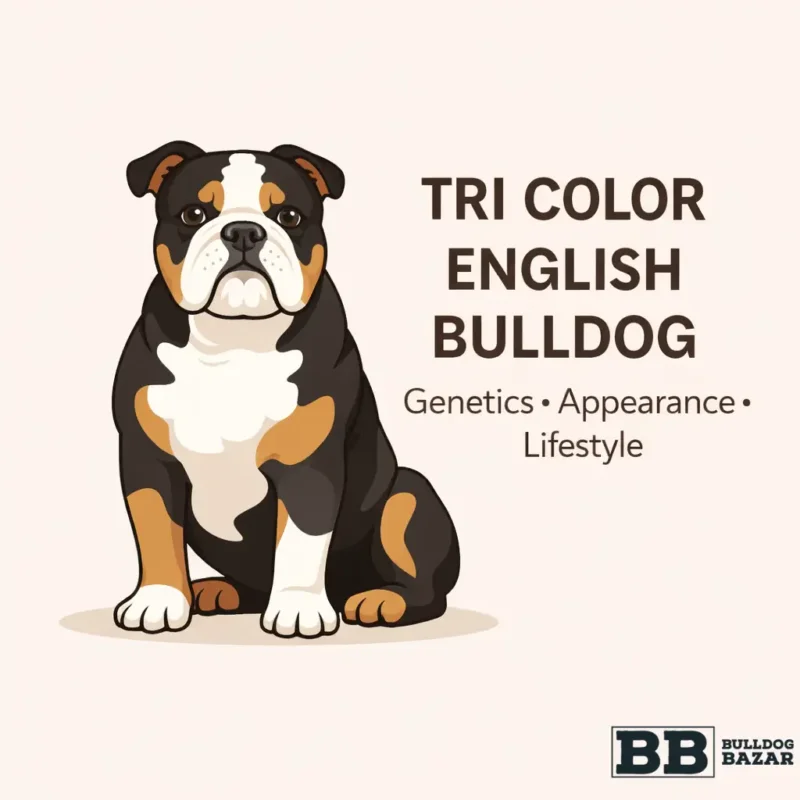

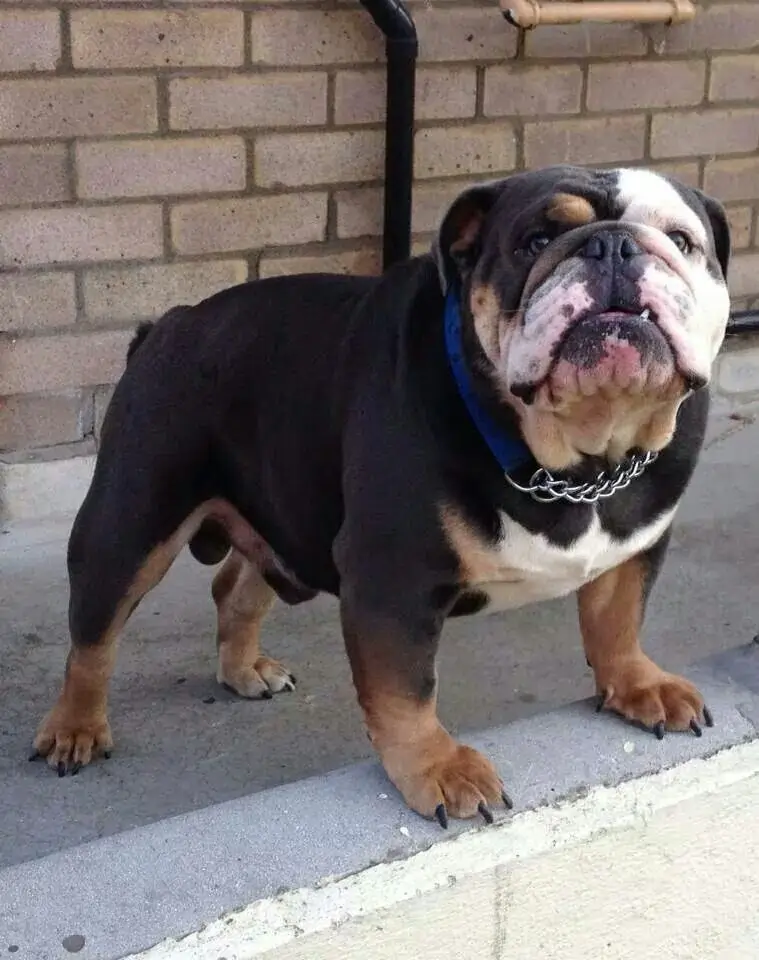
Unlike standard coat colors such as fawn or brindle, the tri color pattern combines a base color with tan points and white markings, creating a high-contrast appearance that many Bulldog enthusiasts find especially striking.
In this guide, we’ll break down what makes a tri color English Bulldog different, how the tri color pattern works, whether it is officially recognized, typical price ranges, and how it compares to other popular variations like the brown English Bulldog.
Table of Contents
What Is a Tri Color English Bulldog?
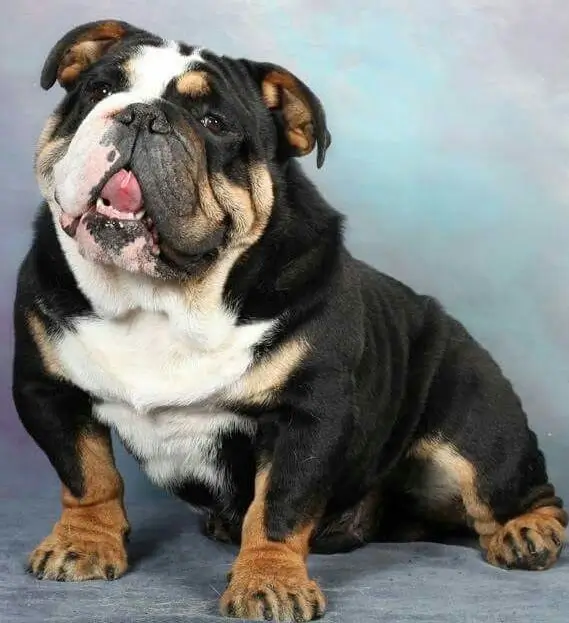
A tri color English Bulldog is defined by a coat pattern that displays three clearly distinct colors rather than a single solid shade or a simple two-color combination. This pattern typically includes a base color, tan points, and white markings, all appearing in specific areas of the dog’s body.
In most cases, the base color can be fawn, blue, chocolate, or black, while the tan points are commonly found above the eyes, on the cheeks, chest, and legs. White markings usually appear on the chest, neck, or face, helping create the visual contrast that makes the tri color pattern easy to recognize.
It is important to understand that “tri color” refers to the coat pattern itself, not a single official color classification. Because of this, tri color English Bulldogs can vary significantly in appearance, even when they share the same three-color structure. Each dog’s pattern placement is unique, which adds to the appeal of this variation among Bulldog enthusiasts.
How the Tri Color Pattern Works
The tri color pattern in English Bulldogs is the result of specific genetic combinations that control how pigments are expressed across the coat. Rather than being a random mix of colors, the pattern follows a structured distribution that creates the three-tone appearance.
At its core, the tri color pattern consists of a primary base color, paired with tan points and white markings. The tan points are caused by the presence of the tan-point gene, which adds lighter markings in predictable areas such as above the eyes, on the muzzle, chest, and legs. White markings are typically influenced by piebald genetics, which limit pigment in certain regions of the coat.
Because multiple genes interact to produce this pattern, two tri color English Bulldogs can look noticeably different even if they share similar base colors. The placement, intensity, and balance of each color vary from dog to dog, giving every tri color Bulldog a distinct and individualized appearance.
It’s also important to note that the tri color pattern should not be confused with so-called “rare colors.” While tri color Bulldogs may include uncommon base colors such as blue or chocolate, the tri color designation itself refers strictly to the pattern, not to the rarity or recognition status of the color.
Common Tri Color Combinations

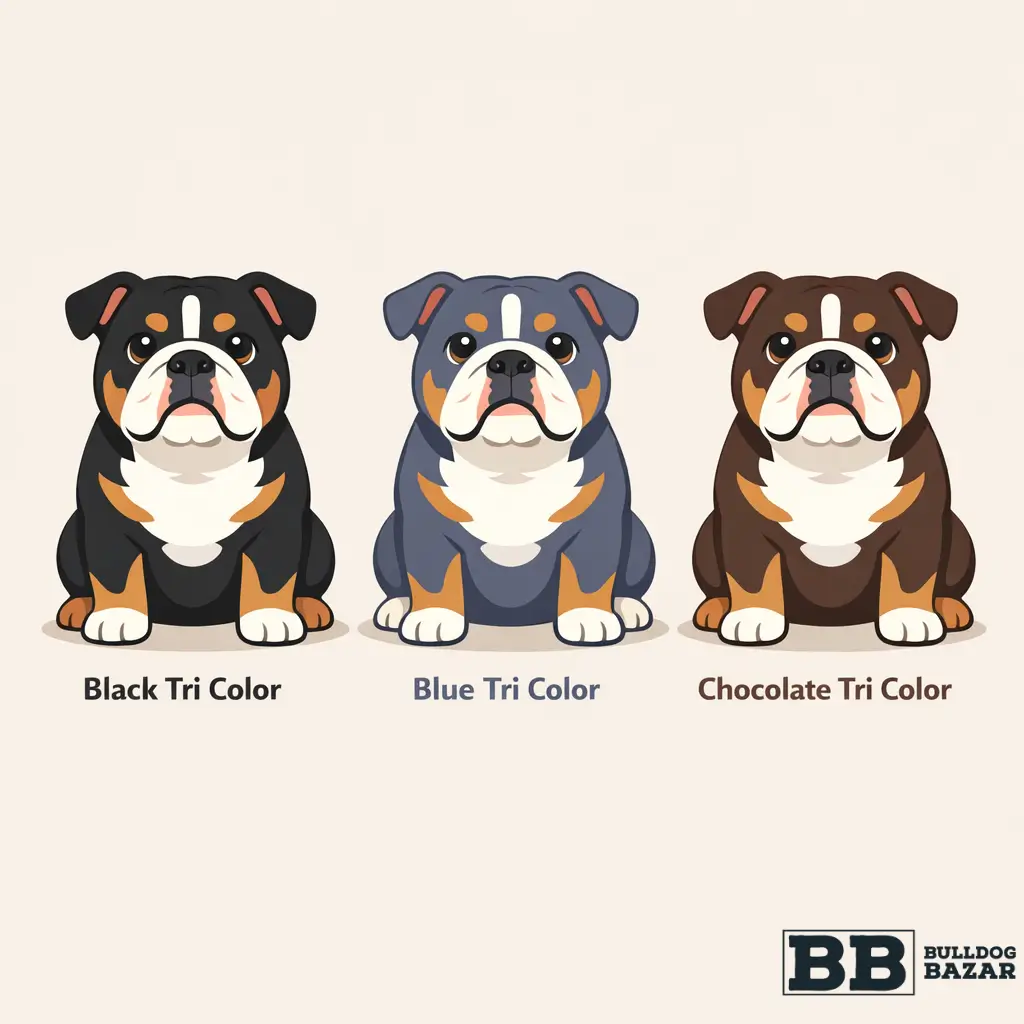
One of the most commonly seen combinations is fawn, white, and tan. This variation offers a more traditional look while still displaying the clear contrast that defines the tri color pattern. It is often preferred by owners who want something distinctive without straying too far from classic Bulldog coloring.
Blue tri color English Bulldogs feature a blue-gray base coat combined with tan points and white markings. This variation stands out due to its cooler tone and is often mistaken for a “rare color,” even though the tri color pattern itself is separate from color rarity classifications.
Chocolate tri color Bulldogs display a deep brown base color paired with tan and white accents. This combination creates a warmer, richer appearance and is commonly associated with higher demand due to its visual impact.
Less frequently, tri color Bulldogs may also appear with lilac or other diluted base coats. Regardless of the base color, what defines these dogs as tri color is the presence of three clearly separated colors arranged in a recognizable pattern rather than the shade itself.
Black Tri Color English Bulldog

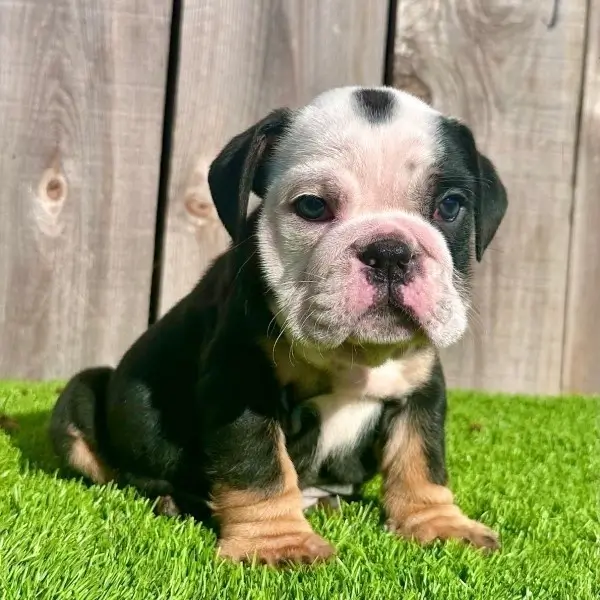
Because black is a strong and dominant base color, the contrast between the three tones tends to be very clear and well defined. Tan points are usually visible above the eyes, on the cheeks, chest, and legs, while white markings often appear on the chest, neck, or parts of the face. This balanced distribution is what makes the black tri color pattern easy to identify.
Compared to tri color Bulldogs with blue, chocolate, or lilac base coats, the black tri color variation is more commonly produced in breeding programs. For this reason, it is often considered the “standard” tri color look, even though tri color itself remains less common than traditional solid or brindle coats.
Despite being the most common tri color variation, black tri color English Bulldogs are still visually distinctive and highly sought after. Their popularity comes from the strong contrast of colors rather than extreme rarity, making them a frequent reference point when people think of tri color English Bulldogs.
Is the Tri Color English Bulldog Rare?
The tri color English Bulldog is often described as rare, but the reality is slightly more nuanced. While the tri color pattern is not commonly seen in standard breeding programs, it is more accurate to classify it as uncommon rather than truly rare.
The perception of rarity comes from the specific genetic combination required to produce the tri color pattern. Breeding for a base color, tan points, and white markings at the same time takes careful selection and planning, which limits how frequently these Bulldogs are produced. As a result, tri color English Bulldogs appear less often than traditional colors such as fawn, brindle, or white.
Another factor that contributes to this perception is demand. Tri color Bulldogs attract attention due to their high-contrast appearance, which increases interest among buyers and breeders alike. When demand exceeds availability, the pattern is often labeled as rare, even if it exists consistently within certain breeding lines.
In short, tri color English Bulldogs are uncommon and visually distinctive, but they are not genetically rare in the same sense as some dilution-based colors. Understanding this distinction helps set realistic expectations when researching availability and pricing.


Are Tri Color English Bulldogs Recognized?
Tri color English Bulldogs are not officially recognized as a standard color pattern by major kennel clubs. Traditional breed standards typically focus on established colors such as brindle, fawn, red, white, and combinations of these, rather than multi-tone patterns like tri color.
Because the tri color pattern is defined by its visual structure rather than a single recognized color, Bulldogs with this pattern are generally not eligible to compete in conformation shows under strict kennel club guidelines. This does not affect their status as purebred English Bulldogs, nor does it impact their suitability as companions or family pets.
Many tri color English Bulldogs are bred specifically for the pet market, where appearance and temperament are prioritized over show eligibility. As a result, they are commonly labeled as “pet quality” rather than “show quality,” even when they come from reputable breeding lines.
For prospective owners, it’s important to understand that lack of official color recognition does not mean the dog is unhealthy or improperly bred. Recognition standards are based on tradition and consistency, not on the value, personality, or companionship a Bulldog can offer.
Tri Color English Bulldog Price
The price of a tri color English Bulldog is generally higher than that of Bulldogs with standard coat colors. This difference is driven by a combination of limited availability, higher demand, and the selective breeding required to consistently produce the tri color pattern.
On average, tri color English Bulldogs tend to fall into a mid-to-high price range when compared to more common variations such as fawn or brindle. Pricing can vary significantly depending on factors like breeder reputation, bloodline quality, geographic location, and the specific base color involved in the tri color pattern.
Below is a general price range to help set realistic expectations:
- Standard English Bulldog colors: $1,500 – $3,000
- Tri color English Bulldogs: $3,000 – $5,000
- Tri color with uncommon base colors (blue or chocolate): $4,000 – $6,000
It’s important to remember that price should never be the only deciding factor. Responsible breeders prioritize health testing, proper care, and stable temperament over coat pattern alone. A well-bred Bulldog with a standard color will always be a better choice than a poorly bred dog selected purely for appearance.

Health Considerations
The tri color English Bulldog does not have health risks that are inherently different from those of other English Bulldogs. Coat pattern alone is not a determining factor in a dog’s overall health. Instead, genetics, breeding practices, and daily care play a much larger role.
Like all English Bulldogs, tri color Bulldogs may be prone to breed-related conditions such as breathing difficulties, joint issues, skin fold infections, and sensitivity to heat. These concerns are linked to the breed’s physical structure rather than coat color or pattern.
When evaluating a tri color English Bulldog, it is essential to focus on responsible breeding. Reputable breeders prioritize health screenings, proper lineage selection, and balanced breeding decisions rather than producing dogs based solely on appearance. A well-bred Bulldog, regardless of color, will generally have fewer long-term health complications.
Regular veterinary care, proper nutrition, weight management, and attention to skin and respiratory health are key factors in ensuring a healthy life for any English Bulldog, including tri color variations.
Temperament & Personality
The temperament of a tri color English Bulldog is no different from that of any other English Bulldog. Coat pattern does not influence personality, behavior, or trainability. What owners can expect is the classic Bulldog temperament that has made the breed so popular worldwide.
English Bulldogs are known for being calm, affectionate, and deeply attached to their families. They tend to form strong bonds with their owners and are often content with relaxed routines, making them well suited for apartment living or quieter households. Despite their sturdy appearance, they are typically gentle and patient, especially with children.
Tri color English Bulldogs may display a playful and sometimes stubborn side, which is characteristic of the breed. While they are not highly energetic, they enjoy short bursts of play and interaction. Positive reinforcement and consistency work best when it comes to basic training.
Overall, choosing a tri color English Bulldog means choosing the same loyal, easygoing companion the breed is known for, with the added appeal of a visually distinctive coat pattern.
Celebrating the English Bulldog Lifestyle
For many owners, living with an English Bulldog goes beyond basic care and companionship. The breed often becomes part of daily routines, personal identity, and lifestyle choices. From home décor to clothing, bulldog-inspired items are a popular way to express that connection.
Whether you share your home with a tri color English Bulldog or simply admire the breed’s distinctive look, celebrating the Bulldog lifestyle is about appreciating its character, humor, and unmistakable presence. The tri color pattern, with its strong contrast and visual appeal, adds another layer to what already makes the breed so recognizable.
If you’re interested in bulldog-inspired products, you can explore our curated collection of English Bulldog T-shirts, designed for owners and fans who want to showcase their connection to the breed. For gift ideas, our selection of Bulldog Gifts includes items created with bulldog enthusiasts in mind.
These products are meant to complement the Bulldog lifestyle naturally, reflecting the bond between owners and their dogs without compromising authenticity or comfort.
Conclusion
Tri color English Bulldogs stand out for their striking coat pattern, but their true value lies in the same qualities shared by all English Bulldogs: loyalty, calm temperament, and strong companionship. Understanding how the tri color pattern works, how common it truly is, and how it compares to other variations helps set realistic expectations for potential owners.
By focusing on responsible breeding, proper care, and informed decisions rather than appearance alone, owners can enjoy a rewarding relationship with their Bulldog. Whether chosen for its tri color pattern or simply for its personality, the English Bulldog remains a breed defined by character, connection, and lasting companionship.
Frequently Asked Questions (FAQ)
Tri color English Bulldogs are considered uncommon rather than truly rare. The tri color pattern requires specific genetic combinations, which makes it less frequently seen than standard colors like fawn or brindle, but it still appears consistently in certain breeding lines.
Tri color is not officially recognized as a standard color by major kennel clubs. Bulldogs with a tri color pattern are still purebred English Bulldogs, but they are typically classified as pet quality rather than show quality.
Yes. The black tri color English Bulldog is the most common and widely recognized variation within the tri color pattern. Other versions, such as blue or chocolate tri, are generally less common.
No. Tri color English Bulldogs do not have health issues that are directly linked to their coat pattern. Health depends on genetics, breeding practices, and care, not on whether the dog is tri color.
No. Coat color and pattern do not influence temperament. Tri color English Bulldogs share the same calm, affectionate, and loyal personality typical of the breed.
Tri color English Bulldogs are often priced higher than standard colors due to demand and selective breeding. However, price varies widely depending on breeder reputation, bloodline, and overall health quality.
Yes. Like other English Bulldogs, tri color Bulldogs adapt well to apartment living. They are generally calm, low-energy, and comfortable with indoor routines, as long as their exercise and care needs are met.
A tri color English Bulldog puppy typically costs more than standard-colored puppies. Prices commonly range from $3,000 to $5,000, depending on breeder reputation, bloodline quality, location, and overall health standards.
Yes. Tri color English Bulldog puppies may experience slight changes in shade and contrast as they mature. Tan points and white markings usually remain visible, but coat intensity can deepen or soften with age.